
Meet Panos Tsarchopoulos, who is spearheading the development of the DECODIT ‘empowered citizen’ digital app and gives an update on its status.
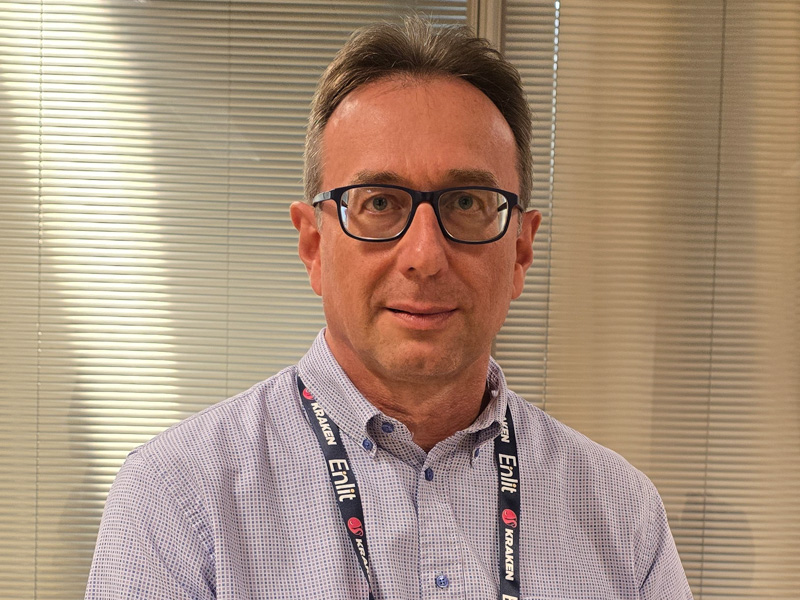
Working at the Greek software and data analytics company Pragma-IoT, Panos is the company’s EU Projects Manager. He is an electrical and computer engineer with a PhD in smart and intelligent cities.
The development of the app is the focus of WP3 and it is intended to form the interface between the users and the DECODIT toolboxes. The app is based on the earlier ACCEPT project, with several key additions for DECODIT, such as an improved user interface, new tools and especially an AI assistant, developed by various DECODIT partners and integrated in the app by Pragma.
He explains that the app has four main screen categories representing the four key areas of the project – understanding, optimising, automating and financing.
“In the understand section users can gain understanding of their energy usage from their consumption data and all things about energy. In optimise, they can see suggestions on how to optimise different devices to reduce energy consumption. They can then set up some automations, for example to operate the water heater during the time of PV production or to charge their electric vehicle when the prices are low, and in finance, they can evaluate different renovation options.
“Alongside these the user can also use the AI assistant to ask questions using natural language, e.g. to ask which appliance consumes more energy, the water heater or the air conditioning in the living room? The assistant accesses the DECODIT tools and data to respond like a conversation – like a ChatGPT for energy.”
Going into the data in more detail Panos explains that it is aggregated from different datasets, including smart meters and sensors installed in the users’ premises, and stored in a digital twin of that premise. This then enables the personalised approach with personalised answers.
“So in the example of the energy consumption of the water heater or air conditioning, the assistant retrieves the data for that specific apartment.”
Currently the app is in the design phase, he says.
“We are creating a prototype, connected to the various toolboxes. Because there is also the co-creation aspect we intend to discuss it with users to get their opinion and then make adjustments and that will happen in the months ahead.”
He notes that this is involving a lot of collaboration between the various technical partners, with each responsible for developing specific parts of the tool. He also adds that it will be developed in five languages for the individual pilot countries, with the goal is to complete the app by month 30 of the project – towards the end of 2026.
Turning to challenges, Panos says one is the involvement of users, particularly in Latvia and Switzerland. He also notes the challenge of integrating all the toolboxes into a single system.
“We have had to have a lot of meetings with the partners to overcome the technical difficulties so we can deliver a ‘one stop shop’ for users.”
Apart from the different languages, another major challenge has been the financing toolbox – not only to encompass the different renovation options but also to tailor these to the different climatic, energy pricing and loan conditions of the pilot countries.
Beyond the end of the project the intention is to make the app more widely available and TPanos says that there are collaborations with energy providers in place.
“Our collaboration has been a continuation of the previous ACCEPT project and we want to make the app commercial after the end of DECODIT, licencing it to energy providers.
“With the smart home movement more consumers want this type of app and through DECODIT we will show that it can deliver efficiency gains and cost savings.”