
The DECODIT pilot in the province of Murcia in southeastern Spain is collecting social and other information from consumers to enable the development of bespoke energy management tools.
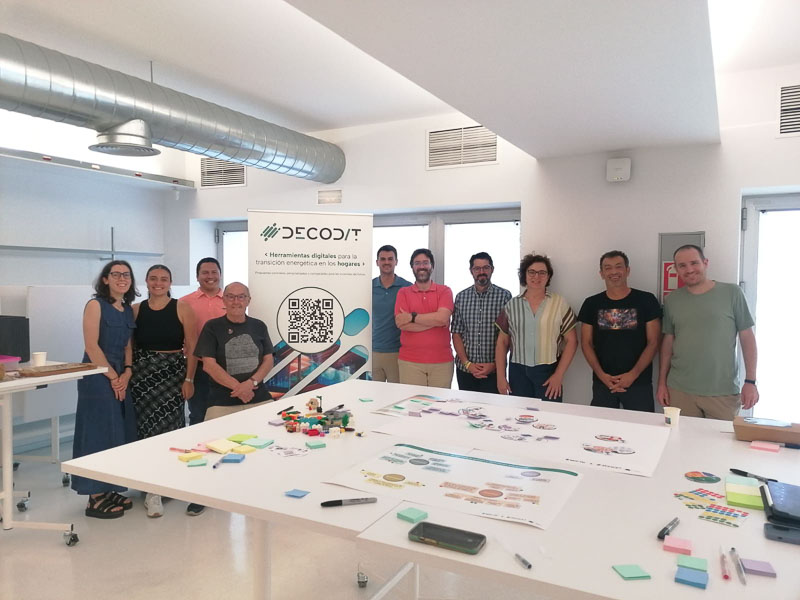
The main objective of the pilot is to develop tools that are adapted to the specific needs and circumstances of users, helping them to participate in the energy transition of their own homes. These solutions will be, based on information, including their energy consumption data and the vision of their relationship with the energy system gathered through the co-creation activities within the Spanish living lab.
In this interview, Antonio Soler, Vice President of the La Solar Energía energy cooperative in Murcia – one of the oldest in Spain – and Gonzalo Páez, R&D Project Manager at Voltiva Energy, who are leading the Spanish pilot, give an update on progress.
What is the current status of the pilot?
Currently the pilot is fully operational. It is important to remember that the users in this pilot were participants in the earlier ACCEPT project to develop a digital toolbox for energy communities. Thus they start with more advanced prior knowledge.
This is the reason why we have been able to advance more quickly than the other pilots, proceeding with a full review of all the devices deployed in homes to ensure connectivity and adequate data collection. Likewise, information has been provided to users about the objectives of this project and what is required of them for adequate participation.
What challenges have been/are being encountered?
Until now, the project has been relatively easy to launch due to the prior knowledge of users in what is a participation in a project of this type. The main challenge has been to recover the activity of the devices, since in the interim period between the end of ACCEPT and the start of DECODIT, several users have disconnected their devices or for various reasons there were connectivity failures.
This has meant a review of the connectivity through telephone calls and when this has not been possible, through on-site visits to replace or where possible reconnect equipment. This has involved the remote assistance of the technical team from QUE, another DECODIT partner that was also involved in the ACCEPT project.
It is also worth mentioning that a series of personalised interviews have been carried out with users and members of the work teams of the partners responsible for the pilot, i.e. La Solar and the Spanish energy solution provider Voltiva Energy.
Two face-to-face workshops have also been developed in the towns of Murcia and Cartagena, which required some work to recruit users and coordinate the agendas.
What findings/lessons can you offer so far?
Based on our experience, the main lessons are the importance of distributing adequate information and showing presence and support to users so that they feel that the project is active.
It must be borne in mind that at phases in the pilot, such as at the start, there may be relatively long periods in which users may feel there is no activity, and this makes it more difficult for them to feel involved in the project.
In addition, especially during the equipment installation process, it is important that users understand what data is measured by each device to ensure they fully accept the process beyond the consent form. This will further impact in the specific social KPIs defined.